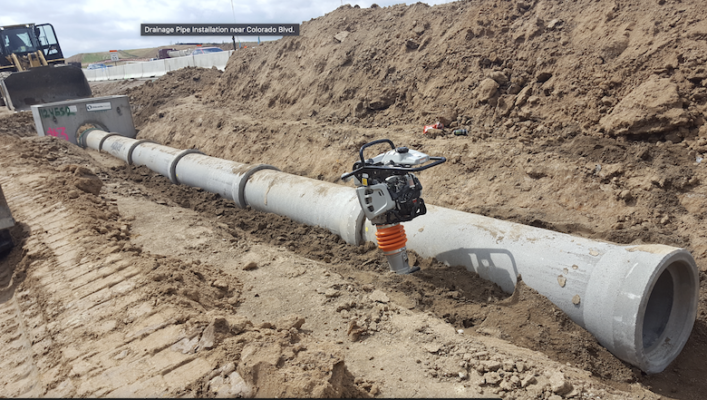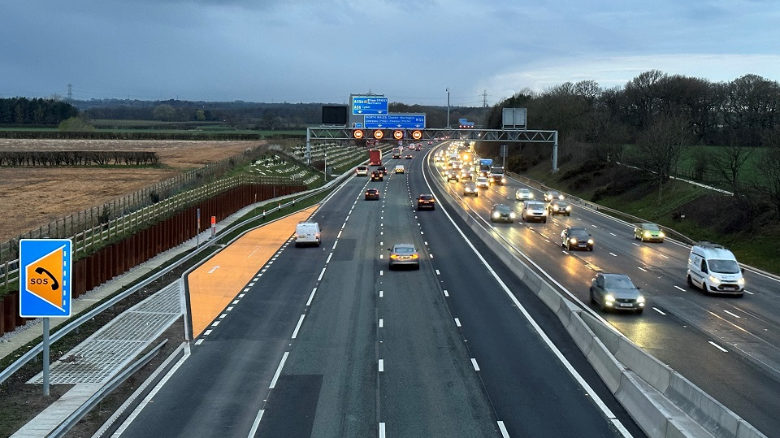
Understanding the environmental markets requires an appreciation of paradoxes. While many water and wastewater systems are in need of capacity and compliance-related improvements, strained municipal budgets and recession-depressed local bond ratings are slowing project implementation.
The result is a market that may be relatively healthy compared to other sectors, but the market is unlikely to experience significant growth any time soon.
“Many projects are contracted but have yet to receive the go-ahead,” observes Scott Warner, vice president and leader of the environmental engineering practice for London-based AMEC. “Occasionally, we see upticks in activity when agencies come up against their compliance deadlines and realize that they have no choice but to get things done.”
Dan Batrack, CEO of Tetra Tech, Pasadena, Calif., adds that while local receipts are generally stable, the market is likely to remain in a holding pattern for some time. Federal funds to State Revolving Loan Programs—a key source of support for many water and wastewater projects around the country—may be trimmed in the name of deficit reduction. “That could pose additional hardships for these projects,” says Batrack, whose firm's current assignments include managing a $26-million upgrade to the water and wastewater systems serving Fort Gordon, Ga., as part of a privatization agreement with the city of Augusta. “The market for municipalities and states will be difficult through the rest of 2011 and into 2012.”
With water quality mandates to meet, many localities are taking a closer look at design-build. According to Art Umblin, wastewater practice leader for MWH Global, Broomfield, Colo., design-build is attractive not only from a cost and schedule standpoint “but also in helping those jurisdictions facing other pressing issues, such as resource scarcity and recapturing nutrients for beneficial uses.”
One recent example is the $22.7-million upgrade to the 35-year-old, 36-MGD Corona del Mar Water Treatment Plant, located in Goleta, Calif., which includes energy-saving treatment technologies as part of its upgrade
With local ratepayers being asked to supply a greater portion of the environmental infrastructure funding formula, the onus is increasingly on jurisdictions and their consultants to make a convincing case for their projects.“The cost of these inherently high-profile projects is quite large—often the largest investment most communities will ever make,” explains Craig Goehring, CEO of Walnut Creek, Calif.-based Brown & Caldwell. “Citizens want to be sure that the approach is sound and will produce tangible benefits.”
Goehring points to the $400-million biosolids program currently under construction at the Blue Plains Advanced Wastewater Treatment Plant in Washington, D.C. When it begins operation in 2014, the innovative sludge digestion process will produce higher-quality biosolids and generate 13 MW of power, saving the D.C. region millions of dollars and improving water quality in the Potomac River estuary.
“Because pressure is increasing for solutions that don't cost a lot, the technical advances in this sector are very encouraging,” Goehring adds.
Umblin says sustainability is a top concern for water and wastewater utilities.“Many regions where water is becoming scarce are looking to recover wastewater as a resource for potable, non-potable and other beneficial uses,” he says. MWH's recently completed $80-million phase-one expansion of the Tri-Cities Water Pollution Control Plant in Oregon City, Ore., showcased many sustainable design technologies, Umblin says. “The market has become far more complex, which is pushing engineers to be smarter and more creative,” observes AMEC's Warner. “Those with the best three-dimensional view of the project and understanding of the owner's needs will be ones who get the job.”


Sign in to Comment
To write a comment about this story, please sign in. If this is your first time commenting on this site, you will be required to fill out a brief registration form. Your public username will be the beginning of the email address that you enter into the form (everything before the @ symbol). Other than that, none of the information that you enter will be publically displayed.