|
|
July 16, 2007
That Accident
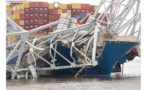
I can't remember if my reaction was "Oh s---," "Oh no," or "Oh my God" when I heard the news about the accident at the Granite Archer Western $266.8-million U.S. Hwy. 90 Bridge over St. Louis Bay in Mississippi. I was talking to a safety guy I know and he said, "I know you don't watch television, and I didn't want to be the one to tell you, but there was an accident at the Bay St. Louis Bridge."
He knew I'd written several stories about the project, which was nothing short of amazing. I didn't want to write the accident story, but I knew I had to. I simply couldn't pretend I just didn't know about it. I told myself that every other contractor out there performing similar work needs to know what really happened because they all know that could have been them.
Of course, no one will say that. Thank God that wasn't me. But you can bet the next morning, everyone was double checking things on their job site.
When there is an accident, everyone goes into what I call turtle mode. Pull it in, conserve resources, and present a hard, quiet, united exterior. The whole stigma of an accident screams back away. Dissociate. Don't let any of their shit splatter on you. So how do you get those lessons learned when everyone is worried about liability, investor confidence, bonding capacity and meeting a deadline in spite of a serious setback?
You wait and hope that the truth will eventually bubble up because people need to know. That's what I've discovered.
OSHA gave me the pat comment/no comment that they would have no remarks for six months, the duration allotted for an investigation and report. I made all of the calls to the GAW folks, MDOT, URS, every company that I had spoken to before in my coverage of the project, knowing no one would talk to me. I thought, in six months, GAW will discreetly meet the second milestone and no one will ever talk about this again.
I wanted to call Allan Nelson, project manager for GAW, and tell him how sorry I was about the whole thing. No matter where or with whom the ultimate responsibility/blame/whatever rests, I knew the project manager was grieving for those men. I met many of the people involved in the project. It was the sort of project people were proud to be a part of, the kind of project one brags about to family and friends. I hated the idea that they were probably running around trying to do damage control, while simultaneously reassuring shaken workers, figuring out how to make things right to get the job back on track, and, yes, deliver the project without any further loss. It seemed that whatever I would write, say or do would ultimately be insensitive to the families, friends and co-workers of the deceased and injured, or misconstrued as finger-pointing or candy coating.
My real feelings? It just isn't fair. The St. Louis Bay Bridge was the sort of project people were proud to be a part of, the kind of project one brags about to family and friends. It was a project that symbolized the region's recovery, the industry-wide spirit of get ‘er done, human fortitude triumphing over natural disaster and seemingly insurmountable goals. I hate the idea that what would have gone down in history as an unprecedented accomplishment will now likely be remembered as "that accident."
I didn't know how to say I was grieving over the injustice of it all without sounding like I just love GAW and know they possibly couldn't have done anything wrong. Who was at fault? What went wrong? I conjectured early on that the sub erecting the column forms must have done something wrong. Then, looking at the photos, I thought perhaps a shift in the breeze or weight distribution on the barge could have caused the concrete bucket to catch on the top of the form, pull and cause the whole thing to collapse. It could have been a fluke.
A pile driving project manager told me that word on the street was that GAW was pouring the concrete too fast and that caused the collapse. Were they working too fast? They met the milestone, but at what cost? GAW won a $5-million early completion incentive on the first milestone. Yes, money makes the world go around, but I've been to too many job sites. This job was about personal pride, team work, community and camaraderie. The reason MDOT provided the incentive was because the highway department recognized the symbolic significance of restoring the key artery to the region's recovery. It started out as more than just a bridge project.
It continues to be more than just a bridge project. It's up to GAW and the industry as a whole to determine what more it will be. Will it be "that accident?" Or will the folks at GAW set another precedent with an open, transparent exchange of information/lessons learned that will help others avoid costly, deadly mistakes?
Safety people always say how accidents can be avoided, but not if we don't make use of these valuable experiences to improve on policies and procedures. I hope, when the investigations are complete, ENR can tell the story of what really happened, so that others can avoid making the same mistakes.
Comments
July 30, 2007
As a bridge inspector for 17 years, accidents do happen. I'm pro-union. The contractors in the South hire unskilled, low pay works to make those big extra $$$. I been in the South about 2 years on a big project and I don't have a carpenter to lay out a set of steps.
Mike Goldinger
July. 27, 2007
Excellent commentary on a difficult subject.
Steve Setzer
|
|
GUMBO
|
Angelle Bergeron
Angelle is a freelance writer who lives and works
in New Orleans. She stumbled onto construction writing six or
seven years ago and it never let her go. She is the New Orleans
correspondent for Engineering News-Record.
|
|