Engineering professor Bernard Amadei could not have imagined when he founded Engineers Without Borders in 2001 the impact it would have on impoverished communities around the world, on young engineers and their peers in other fields, and on the construction industry’s expectations for a motivated and enlightened future workforce. What began as an overseas field trip for Amadei and some University of Colorado students today is a global phenomenon with 300 chapters, more than 12,000 student and professional members working on 400 needed infrastructure projects and a $3-million budget.
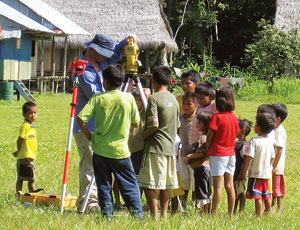
“There is still a large disconnect between the magnitude of the problems in our global economy and what is expected of young engineers in engineering firms,” says Amadei. “The engineering profession must revisit its mindset and adopt a new mission statement—to contribute to the building of a more sustainable, stable and equitable world.”
Barely into the workforce or through college, EWB participants design and build infrastructure in communities where it never before existed. They learn how to put classroom theories to practical use and to solve political, social and financial project challenges.

Academic is giving engineering education a new twist, founding a movement catching on with students, professionals and global communities.
EWB has been a “life-changing experience” for participants and often substitutes for better-funded government programs, says Bill Wallace, a board member and sustainability consultant. The normally low-key Amadei has left audiences “in tears,” says one colleague. He has propelled EWB to draw on industry brainpower and deep pockets. Executives, who once had to be begged for support now vie for board spots as EWB’s value is recognized and appreciated.





Post a comment to this article
Report Abusive Comment