|
The U.S. Dept. of
Energy is looking for a way to slash costs and safeguard workers
during asbestos removal, and PipeTaza system to remove
asbestos from pipes designed by 28-year-old engineer Rob Fuchscould
be the solution.
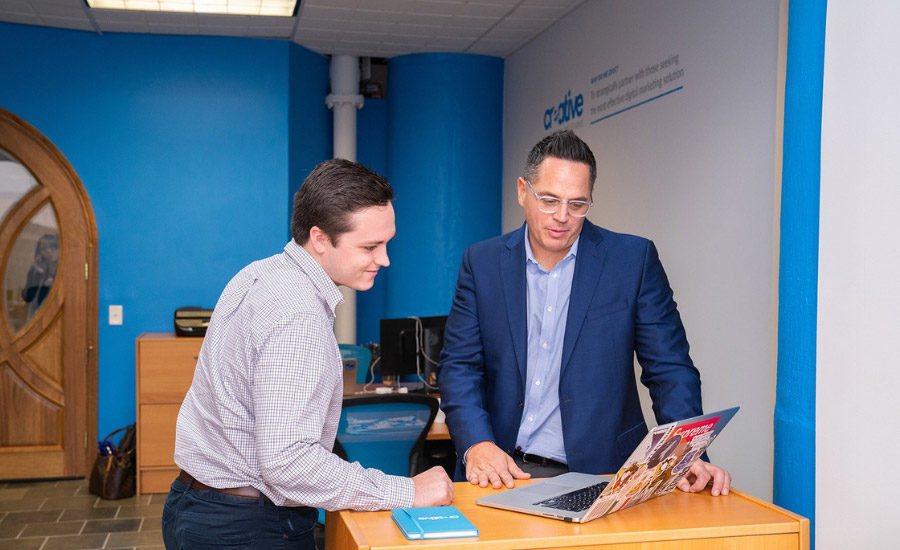
Fuchs, lead design engineer at
Automatika Inc., is responsible for the structural design
of PipeTaz, a machine to protect workers from inhaling harmful
fibers during the demolition of structures. The firm claims
it can significantly reduce disposal costs by decreasing the
volume of waste by 40 to 60% and weight by 90%.
"Right now, when an asbestos
abatement company disposes of pipes covered in asbestos they
have to dispose of the entire pipe, so they use waste burial
containers," he says. The containers get heavy very quickly,
and can't be filled to capacity. You aren't maximizing your
space. So what we do is take the pipe, run it through PipeTaz,
strip the asbestos from the pipe and in the end you're left
with a bag of asbestos that can be disposed of through burial
or chemical/heat treatment, and a pipe that can be recycled."
A graduate of Carnegie Mellon University,
Fuchs was hired part-time by CMU's Robotics Engineering Consortium
during his junior year after a friend noticed his homemade
entertainment center made of two steel C-channels lag-bolted
to the concrete wall of his dorm room supporting plexiglass
shelves.
After graduating from CMU with
a civil engineering degree, Fuchs joined Automatika and has
been involved in developing reconnaissance robots for use
in firefighting, police, explosive-ordinance disposal and
counter-terrorism in addition to his work with asbestos abatement
robots.
With two rounds of funding totaling
$848,700 through DOE's Small Business Innovation Research,
Fuchs and his five teammates are nearing completion of assembly
for PipeTaz and plan to wrap up the testing phase by this
summer.
The device consists of cutting
chamber flanked by a set of end supports, which hold each
section of pipe and move it into and out of the chamber. The
machine uses mechanical cutters and 3,000 psi high-pressure
water jets to remove asbestos lagging and insulation off the
pipes. Pipe of 1 to 12 in. in diameter can be placed on the
support frame and advanced into the cutting chamber.
Three axial cutters and one radial
cutter made up of 4-in. diamond-coated grinding discs strip
the pipes of harmful insulation. The axial cutters swing down,
cutting the insulation along the pipe, and then swing out.
The pipe then is mechanically rotated for the radial cut and
the last inch of asbestos is removed by the high- pressure
water cutters that are lined up to cut the groove provided
by the cutter disc.
Once the hazardous material is
cut from the pipe, the diced-up pieces are vacuum-conveyed
through a waste-hose to a water separator. An encapsulant
is sprayed by hand onto the freshly cleaned pipe, to ensure
that any last bits of asbestos remain on the pipe until it
is recycled. Water is filtered and re-used. A HEPA-vacuum
pump provides for positive airflow, vacuum and waste-transport.
An integral PLC--Programmable Logic Controller--controls all
sequenced operations and a control panel with touch screen
and control knobs provides feedback to the operator.
"There will be a few
months of testing," says Fuchs. "Testing will begin
on simulant pieces of pipe covered in CalSil [calcium silicate
insulation], which acts a lot like asbestos, but without the
harmful health side effects. During this time, we will be
monitoring to ensure everything is working and making any
modifications."
|