Miles of roads in south Louisiana’s Jefferson, Orleans, Plaquemines, St. Bernard and St. Tammany parishes that were submerged for up to 11 days after Hurricane Katrina struck in 2005 are now getting fixed. The $150-million program aims to repair 51 road segments and examine the often invisible effects of flooding while shaping a long-term asset-management approach.
The South Louisiana Submerged Roads Program is a Federal Highway Administration-funded effort initiated in 2007 by the state Regional Planning Commission and administered by the Louisiana Dept. of Transportation and Development. It was launched this spring with an initial $4-million contract to Boh Bros. Construction Co. LLC, New Orleans.
“Saltwater caused the asphalt to break loose, and four to five months [after Katrina] we saw the overlay fall apart,” says Walter Brooks, RPCexecutive director. Pre-assessments began in summer 2006, says Robert Mendoza, New Orleans public works director. “We found that the asphalt was more oxidized than it should be. It gets brittle and starts to crumble.”
“There was no empirical data on this situation,” adds Jeff Burst, DOTD project management director. Assessors used core samples and ground radar penetration to identify road-base failures.
Engineers found that submersion for longer than five days seemed to be the tipping point. The roads were left in a weakened state, and then heavy trucks used them for debris removal, says Carl Highsmith, FHWA project-delivery team leader. “There is no typical cross section of these streets,” says Wes Bollinger, FHWA division administrator, noting the complexity involved in identifying the degree of flooding and the traffic load’s affect on a road’s design life.
Angelle Bergeron / ENR
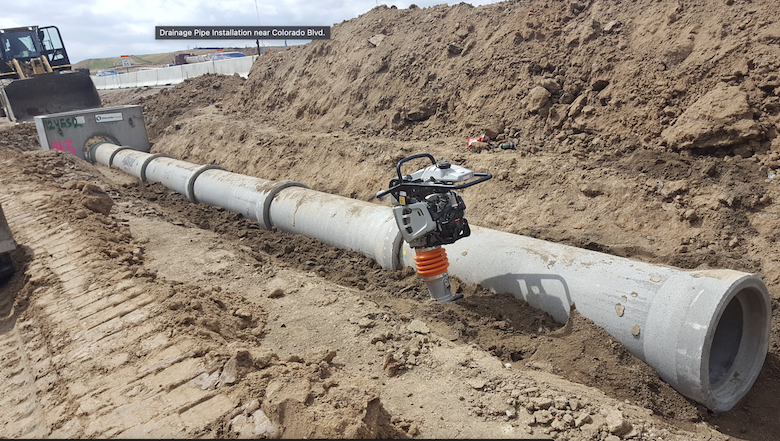
Two years of construction has begun on various New Orleans-area roads flooded by Katrina.
A city-streets repair program funded by the Federal Emergency Management Agency doesn’t cover the major arterials. DOTDis using money left over from the federal $1.1-billion allocation to repair the Interstate 10 twin bridges to fund the submerged roads program.
HNTB Corp., Kansas City, Mo., coordinated the multi-agency effort that tackled permitting issues, public outreach and working with utility companies. “You don’t just come and fix the road without a sewer fix,” says Burst. “It has to be a seamless effort.”
Over the next two years, DOTD will award competitive contracts of various sizes, according to which segments are clustered closest together. Contractors will repair subbases, mill off old pavement and add new as phalt pavement with a minimum depth of 2 in.
• December 28 Issue
• December 7 Ad Close
Stay top of mind in print and online to the owners, engineers and contractors you need to reach.
Get connected today by contacting your account manager, call: 800-458-3842 or