|
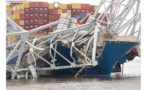
Investigators are trying to determine whether a Japanese contractor consortium or designers associated with the transport ministry of Vietnam were to blame for the fatal Sept. 26 collapse of the 100-meter span of the Can Tho cable-stayed bridge under construction. Taisei-Kajima-Nippon Steel (TKN), the joint venture contractor for the 2.75-km-long suspension bridge, may find it difficult to escape severe censure from the governments of both Vietnam and Japan if found culpable. Evidence is emerging that the company may have ignored warnings about weakness in the scaffolding of the structure.
More than 50 people died in the collapse of the approximately $343-million bridge meant to link the two banks of the Hau River, a tributary to the giant Mekong. The consortium of Taisei Corp., Kajima Corp., and Nippon Steel Corp., with consultant Nippon Koei-Chodai, began work in 2004 with completion slated for next year. Located in southern Vinh Long province, the bridge is financed by Japanese government loans to Vietnam.
Vietnam's Transport Minister Ho Nghia Dung, facing pressures to quit following the disaster, announced he was prepared to give up office if investigations showed his ministry was to blame for it. But he was confident that the investigations would turn up evidence to implicate the contractors, sources say.
Pham Quy Ngo, an official of the Ministry of Public Security, who has been appointed chief investigator into the accident, refused to discuss what evidence has surfaced so far. Both the Japanese government and the contractor have apologized to the families of the victims.
What might help save face for TKN is the suspicion that the designers may have failed to accurately calculate the load-bearing capacity of the pylons during the hours when the concrete was wet and did not set – which is when the accident took place, sources said.
However, the Vietnamese media published a memo written on June 27 by structural specialist Hiroshi Kudo, in which he urged the TKN consortium to "reinforce immediately" the scaffolding and other support for the bridge. Chu Ngoc Sung, an expert at the Hanoi Sciences and Techniques Association, says a section of bracing had broken and brought down everything with it.
Different voices have emerged from the Vietnamese government. Nguyen Ngoc Long, director of the official Work Quality Assessment and Management, has blamed the contractor for poor supervision. Nguyen Van Cong of the Ministry of Communications and Transportation has said heavy rain on an earlier night had softened the earth, causing the pylons to settle and tear down the bracing for the freshly poured spans.
|