subscribe to ENR magazine subscribe
contact us
advertise
careers careers
events events
FAQ
subscriber login subscriber service
ENR Logo
Subscribe to ENR Magazine for only
$82 a year (includes full web access)

transportation
DISASTERS
Feds Deploy Laser Scanners For Bridge Forensic Probe
 
By Tudor Van Hampton
Related Links:

NTSB: Bridge Contractor Had Prior I–35W Experience,

Minn. Bridge Replacement Placed On Fast Track,

Summer Paving Halted Critical Bridge Inspections,

DOT Sec'y Peters: Money No Issue for I–35W Repair,

U.S. DOT Calls For Nationwide Inspections of Steel Deck Truss Bridges,

Multiple Reports, Video Could Shave Months Off Investigation of Fatal Minnesota Bridge Collapse,

DOT, Congress Move to Provide Repair Funds for Minnesota,

Multimedia:

Focus at Bridge Collapse Site Turns to Clean-up

Blogs:

Kormantary: Who Needs Osama When We Terrify Ourselves?

Up Close and Personal

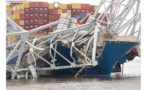
The Federal Bureau of Investigation donated a three–dimensional laser scanning device that transportation officials began using August 4 to document the wrecked Interstate 35W arch truss bridge now laying across the Mississippi River in Minneapolis.

National Transportation Safety Board investigators plan to use images collected from the scan, a partial reconstruction of debris, a recovered surveillance video and an existing computerized analysis of the bridge to model "a very drawn out series" of failure scenarios, says NTSB Chairman Mark V. Rosenker.

"We're really looking at what this computer model will do for us," Rosenker says. "It could be months that we do this. Remember, there are a lot of elements of that bridge."

In addition, the recovered surveillance video "is the equivalent of a flight recorder" of the collapse, says Rosenker. It shows the southern end of the bridge collapsing, followed by the northern end.

"We're beginning to look at that southern end," Rosenker says. "It's interesting to us." As for cause of collapse, the lead investigator reiterated, "We have not ruled out anything."

In the video, the deck and superstructure appear to "split off" in two different directions, Rosenker added. The bridge's concrete deck falls to the east, while its steel superstructure falls to the west.

So far, no pieces of the bridge have been removed from the scene, says NTSB.


----- Advertising -----

 
----- Advertising -----
  Blogs: ENR Staff   Blogs: Other Voices  
Critical Path: ENR's editors and bloggers deliver their insights, opinions, cool-headed analysis and hot-headed rantings
Other Voices: Highly opinionated industry observers offer commentary from around he world.
Reader Photos
Photos from ENR Jobsite Photo Showcase