subscribe to ENR magazine subscribe
contact us
advertise
careers careers
events events
FAQ
subscriber login subscriber service
ENR Logo
Subscribe to ENR Magazine for only
$82 a year (includes full web access)

power & industrial
POWER SUPPLY
New Waste-to-Energy Plant Will Create Renewable Fuel
By Pam Hunter
 

Utilities around the country are casting a watchful eye on a new waste-to-energy plant being built on a six-acre site in Rialto, Calif. The plant will convert biosolids from nearby wastewater treatment plants into a renewable fuel that will be used as an alternative to coal to partially power local cement kilns. Slotted to go online by the first quarter of 2009, the facility is expected to use less energy to treat and recycle biosolids than traditional methods and will be the first commercial application of its kind.

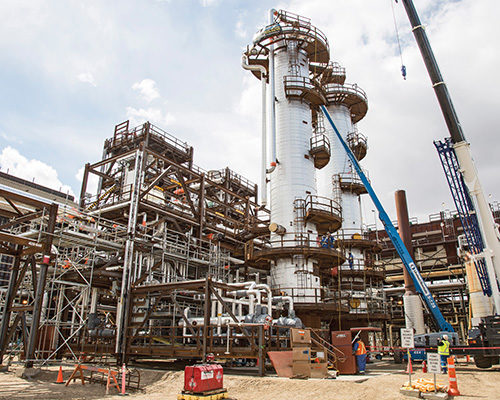
The Rialto plant will be the first of its kind in the U.S.
EnerTech / HDR
The Rialto plant will be the first of its kind in the U.S.

The $160-million Rialto SlurryCarb plant will convert 675 wet tons of biosolids from five municipalities in the Los Angeles region into approximately 145 tons per day of renewable “E-fuel.” The California Energy Commission has certified the fuel as a renewable power source, and the state will potentially be able to use the fuel in meeting its renewable portfolio standard. Atlanta-based EnerTech Environmental developed the SlurryCarb process; Omaha-based HDR is the design-builder.

“This is a technology that provides municipalities with a long-term, beneficial reuse for biosolids. The energy value gets recycled,” says EnerTech CEO Kevin Bolin.

+ click to enlarge
Process takes biosolids and converts the material into 6,000-Btu product to fuel cement kilns.
EnerTech / HDR
Process takes biosolids and converts the material into 6,000-Btu product to fuel cement kilns.

Project officials say the process differs from conventional methods of drying biosolids by using less heat to remove water from sludge and using methane gas created during anaerobic digestion to power the dryers within the plant, reducing the need for natural gas or other sources of energy.

The plant is being privately funded through a mix of tax-exempt and taxable debt, issued through the state of California. Once operational, revenue will come from guaranteed tipping fees under long-term contracts with the municipalities to manage a percentage of their biosolids, as well as “fuel offtake” payments from the cement kilns.

Process

Trucks will dump biosolids into two receiving pits from which the material will be pumped into two above-ground silos for storage until it is ready for processing in one of two streams. Each stream includes two 1,040-cu-ft heaters, a 24-ft x 56-in. reactor and a centrifuge.

Using a combination of 450°F heat and pressure of 590 psi, the process breaks down the cellular structure of the biosolids so it becomes hydrophobic and releases water, say project officials. The resulting slurry will then go through a centrifuge to further remove water. It then will be pumped through a 48-ft triple-pass rotary-drum dryer to create a 6,000-Btu cake that is 95% solids.

The centrifuge discharges water to anaerobic digesters, which generate the methane gas that powers the dryers. The methane created during anaerobic digestion provides approximately 80% to 85% of the energy needed to fuel the dryers. Natural gas provides the rest.

EnerTech and HDR claim the process will result in an overall reduction in energy costs, perhaps by as much as one-third. “I think we are averaging about 69% conversion of organic material in the liquid into methane gas,” says HDR Vice President John Lucey. “That’s going to provide about 85% of the energy needed in the dryer.”

HDR will place standard scrubbers and a regenerative thermal oxidizer at the end of the dryers’ air streams to reduce odor as well as sulfur-dioxide and nitrogen-oxide emissions.

Gaining Currency

The idea of converting waste material to renewable fuel is gaining currency around the world as oil prices continue to skyrocket. Researchers in Europe and parts of Asia are studying various waste-to-energy models, say wastewater treatment professionals. Rising health concerns about the safety of land application of biosolids—particularly in California, where several counties have placed regulatory restrictions on the practice—are prompting sanitation districts to seek alternative methods for managing sludge.

“I think you will see more utilities looking at these opportunities and looking at these technologies more so than ever before,” says Rebecca West, director of technical services for municipal utility Spartanburg Water, Spartanburg, S.C., and president-elect of the Water Environment Federation, Alexandria, Va.


----- Advertising -----
  Blogs: ENR Staff   Blogs: Other Voices  
Critical Path: ENR's editors and bloggers deliver their insights, opinions, cool-headed analysis and hot-headed rantings
Other Voices: Highly opinionated industry observers offer commentary from around he world.
Construction Outlook 2009 Spring Update

A 14 page report on industry trends and detailed forecasts affecting the construction industry in 2009.
----- Advertising -----