When Cleco Corp., a small utility in Louisiana, needed to build a new coal-fired powerplant to help lessen its dependence on natural gas, there was a problem. The unit it wanted to construct was estimated to cost $1 billion–roughly two-thirds of the company's entire net worth.
The standard way utilities do business–charging customers for the plant only after electricity is flowing–would have been a financial hardship for Cleco, which is based in Pineville, La. "It would have been very difficult to do it and keep our credit rating," says Kathleen Nolan, Cleco's chief financial officer. "It would have been a large amount of stretch on a relatively small balance sheet."
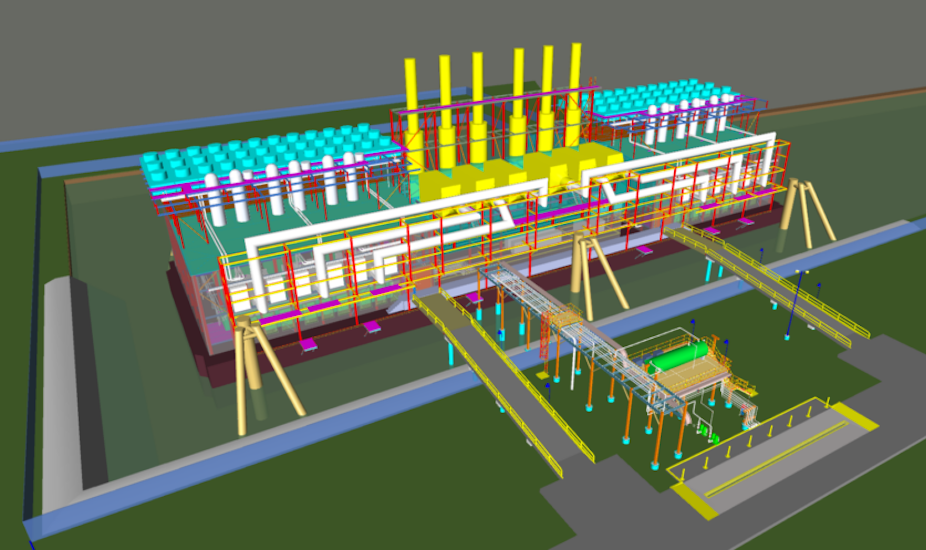
But with the permission of Louisiana regulators, Cleco began charging customers about $2.50 a month for interest expense when it began work on the new circulating fluid bed unit near Boyce, La. Cleco will collect about $145 million from customers before the 440-Mw plant begins operating in 2009. Most of that will go to pay Cleco's prime contractor, The Shaw Group.
The country's 200 or so investor-owned utilities say they expect to spend $400-billion on new powerplants and transmission lines in the coming decades. The regulatory term for allowing utilities to charge for current construction, construction work in progress (CWIP), is also an accounting term. In the 1970s utilities fought battles with customers and politicians over CWIP in a period that could be called the "CWIP wars."
Now CWIP is likely to play a greater role in whether costly new plants and transmission lines get built, say industry observers. "Absolutely, whether or not CWIP is allowed, will be a determining factor," on what type, and whether new infrastructure is built, says Larry Loos, director of Black & Veatch's management consulting division.
It's not just small utilities that are looking to collect for CWIP before plants are operational. Duke Energy, Mid-American Energy and Entergy Corp., among others, have requested and received approval from state public service commissions to collect interest costs from their customers for large coal and proposed nuclear projects. In the most extreme cases, regulators are allowing the utility to charge customers for some of the plant's capital costs before it is in service.
State public service commissions obey by no single rule for allowing utilities to charge customers for construction. The determinations generally are made in rate cases where utilities and advocates for customers and others present evidence before the commissioners make a decision.
State commissions have allowed CWIP in the past, but typically it was only after a company was struggling with the burden of skyrocketing construction costs. Utility and construction executives say allowing CWIP before a project starts is a proactive approach that benefits the utility and its customers.
To encourage new nuclear generation, states including Louisiana, South Carolina, Florida and Georgia have passed rules allowing CWIP to be charged for proposed plants. Many states allow CWIP for other projects, but the public utility commissions approve it on a case-by-case basis.
Likewise, the Federal Energy Regulatory Commission in 2006 began allowing companies to collect 100 percent of CWIP on major transmission projects. The incentive has worked well, said Jeff Greig, who heads up Kansas City-based Burns & McDonnell's consulting arm. About 10 to 12 major new transmission projects have been put on the drawing board because of the incentives.
CWIP has several advantages, according to industry representatives.
"It gives the utility greater certainty, it should lower their overall cost of capital, and it helps ratepayers because it helps avoid the significant jump when a plant goes into service," says Greig.
When interest accrues and compounds over several years, and companies must charge customers for the financing costs, as well as the capital costs of a new generating plant when it goes into service, the increase can be crippling for ratepayers.
"It becomes much more smooth, and an easier process to get the plant in rates without dramatically raising rates to customers," to allow CWIP, said Richard Cortright, an analyst for Standard and Poor's Ratings Services. (S&P is part of The McGraw-Hill Companies, as is ENR.)
Entergy Louisiana, which is requesting CWIP for a $1.5 billion re-powering of a natural gas unit to burn coal and petroleum coke, estimates that having CWIP will save customers $450 million in interest costs, said Mike Twomey, vice president of regulatory affairs for Entergy Louisiana.
CWIP also eases financial concerns of the company, which otherwise would have to fund a capital intensive, multi-year project without any revenue to pay for that project.
"It would be very difficult for management or for a board of directors to say ‘go ahead' without it, and we would be very uncomfortable," in issuing credit ratings, Cortright says.
But allowing CWIP is likely to receive pushback from customers, who are already paying higher power bills because of rising fuel prices.
"Much of these companies have already increased rates or soon will," says Mark Chupka, an analyst at the Brattle Group. "Politically it becomes more difficult to justify this – even though it may have long-term benefits for company and ratepayer."
Nolan, of Cleco, agrees.
"Customers are basically paying for something they don't have a benefit for – there has to be a good reason for [a commission] to approve that."