subscribe to ENR magazine subscribe
contact us
advertise
careers careers
events events
FAQ
subscriber login subscriber service
ENR Logo
Subscribe to ENR Magazine for only
$82 a year (includes full web access)

power & industrial
REFINERIES
Mexican Oil Pipeline Helps Arizona Project Clear Hurdle
By Tony Illia
 
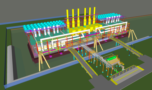
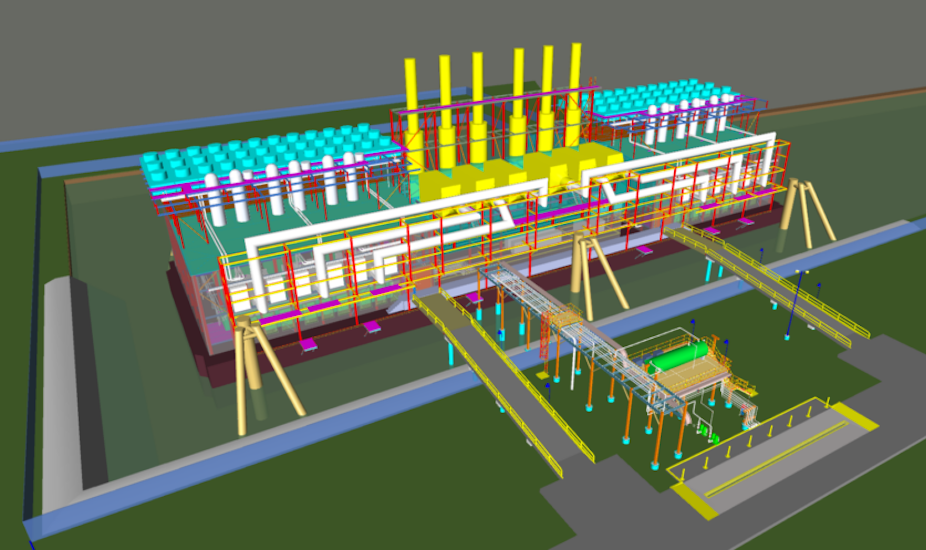
Greenfield. Refinery to be built east of Yuma would have tightest emissions standards ever, claims the developer. (Photo courtesy of Arizona Clean Fuels YUMA LLC)
One of the last remaining hurdles has been removed for construction by mid-2006 in Arizona of the first U.S. grassroots oil refinery in 30 years. Mexico has approved construction of a crude oil pipeline from Baja California to serve the proposed refinery, which would be one of the cleanest in the world.

Arizona’s Dept. of Environmental Quality granted the refinery its Class I operating permit last April. Closing financing remains the only possible cloud over the project.

The operating permit and pipeline agreement are key milestones in attracting investors for the $3-billion project, says David Treanor, vice pres-ident, Arizona Clean Fuels Yuma LLC, Phoenix. The developer claims it has signed memoranda of understanding with four backers that would underwrite the entire development. Treanor declines to name them.

The agreement with Mexico’s Secretaría de Energía will allow WesPac Pipelines Ltd., a unit of Buckeye Pipeline LP, Emmaus, Pa., to finance, construct, operate and maintain the $650-million pipeline as ACFY’s contractor. WesPac is conducting initial site permitting while negotiating with Techint Mexico, a subsidiary of the Techint Group, Milan, Italy, on a pipeline engineering, procurement and construction contract.

The 275-mile line would originate at the Baja port of Guaymas in Punta Colonet. It will have a marine offloading facility and a 2-million-barrel terminal tank farm receiving crude oil from the Gulf of Mexico and possibly Canada’s Athabasca oil sands. “We are going to have to develop a port or use a single mooring buoy 1 km offshore,” Treanor says. “There will be a blending station at the terminal.”

Air-quality concerns have dogged ACFY’s struggle to develop the 150,000-barrel-per-day refinery located 40 miles east of Yuma, Ariz., forcing it to relocate away from Phoenix (ENR 11/1/04 p. 14). The operating permit issued in April allows a maximum of 1,000 tons of emission pollutants annually. “That’s one-half less than the cleanest refinery in existence in the world today,” Treanor says. “We are taking advantage of 30 years’ worth of new technology.”

Steve Owens, director of Arizona DEQ, echoes that. “This is the toughest air-quality permit ever proposed for a refinery. If constructed, this will be the cleanest refinery ever built,” he says.

UOP LLC, Des Plaines, Ill., provided the refinery’s initial engineering design. Arizona Clean Fuels now is negotiating an EPC contract with San Francisco-based Bechtel. Treanor expects both refinery and pipeline to begin construction in mid-year. Initial operations would start in late 2009 or early 2010.

Hurricane Katrina recently shut down 30% of U.S. refining capacity, raising fuel prices along with concerns about the security of the country’s supply lines. U.S. refineries were running at more than a 95% utilization rate before the storm, according to the National Petrochemical & Refiners Association (NPRA), a Washington D.C.-based trade group. Due to industry consolidation, there currently are 148 U.S. refineries with a combined 17-million-bpd capacity, down from 1981’s high of 324 refineries with an 18.6-million-bpd capacity.

“Unfortunately, in today’s world, new refineries are very difficult and cumbersome to build due to permitting, resistance from locals, overall cost, and economics,” says Charles Drevna, NPRA director of technical advocacy. “It’s difficult to arrange financing for a $3-billion venture that will take 10 years to develop with only a 5 to 6% annual return on a good year.”

About 1 million bpd of added capacity is expected to come on line in the next four years from expansions. “These refiners are located on huge parcels of land,” Drevna says. “When you already have the infrastructure in place, it’s easier and faster to expand than to build anew.”


----- Advertising -----
  Blogs: ENR Staff   Blogs: Other Voices  
Critical Path: ENR's editors and bloggers deliver their insights, opinions, cool-headed analysis and hot-headed rantings
Other Voices: Highly opinionated industry observers offer commentary from around he world.
Featured Video
Advertising Opportunities
Global Sourcebook Global Sourcebook

• December 28 Issue
• December 7 Ad Close

Stay top of mind in print and online to the owners, engineers and contractors you need to reach.
Get connected today by contacting your account manager, call: 800-458-3842 or