 |
| NASH |
Despite the rising
tide of insurgent violence in Iraq in October, Bush administration
claims and field reports show solid progress is being made
in reconstruction.
U.S. officials say oil production
is rising and electrical generation has returned to prewar
levels. Industry sources also report progress is being made
in the transportation and water sectors and in military base
construction, as well as the revival of general business activity.
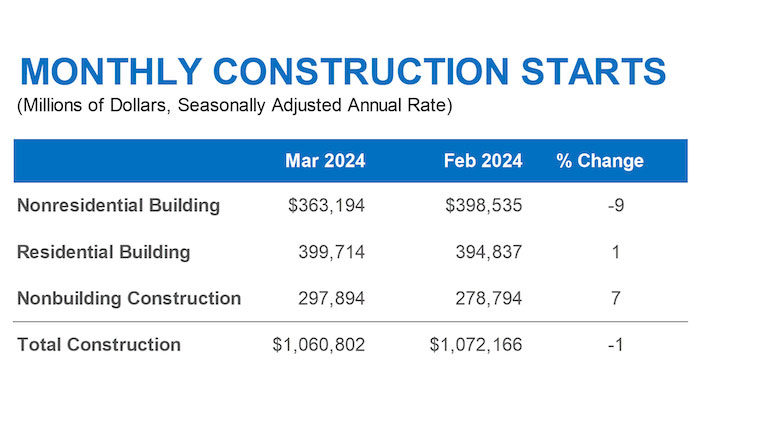
Click
here to view chart
Congress and the administration
are about to decide which federal agencies will award future
construction contracts and the value of those contracts. At
ENR press time on Oct. 14, both the Senate and the House were
fine-tuning legislation to authorize about $18 billion for
Iraq reconstruction as part of a fiscal 2004 emergency supplemental
bill. It would authorize a total of nearly $87 billion for
military operations and rebuilding.
The final bill also will determine
the amount of the second-phase construction contract now out
for bid by the U.S. Agency for International Development.
The request for proposals, with no dollar amount, was published
Oct. 1 on the USAID Website. Bids are due by Oct. 31. However,
there is a possibility that USAID will not award the phase-two
construction contract, says agency spokeswoman Ellen Yount.
The award is subject to congressional funding, she says.
Yount notes that the Coalition
Provisional Authority, which is expected to oversee a new
contracting office to administer the next round of funds,
does not have government contracting authority. "It is
a coalition," she explains. It is possible that several
government agencies may award contracts, but the details are
still being worked out, she says. "We understand the
[new agency] will have an oversight and coordinating role,"
Yount said.
Still, groundwork to set up an
open-contracting and program-management structure under CPA
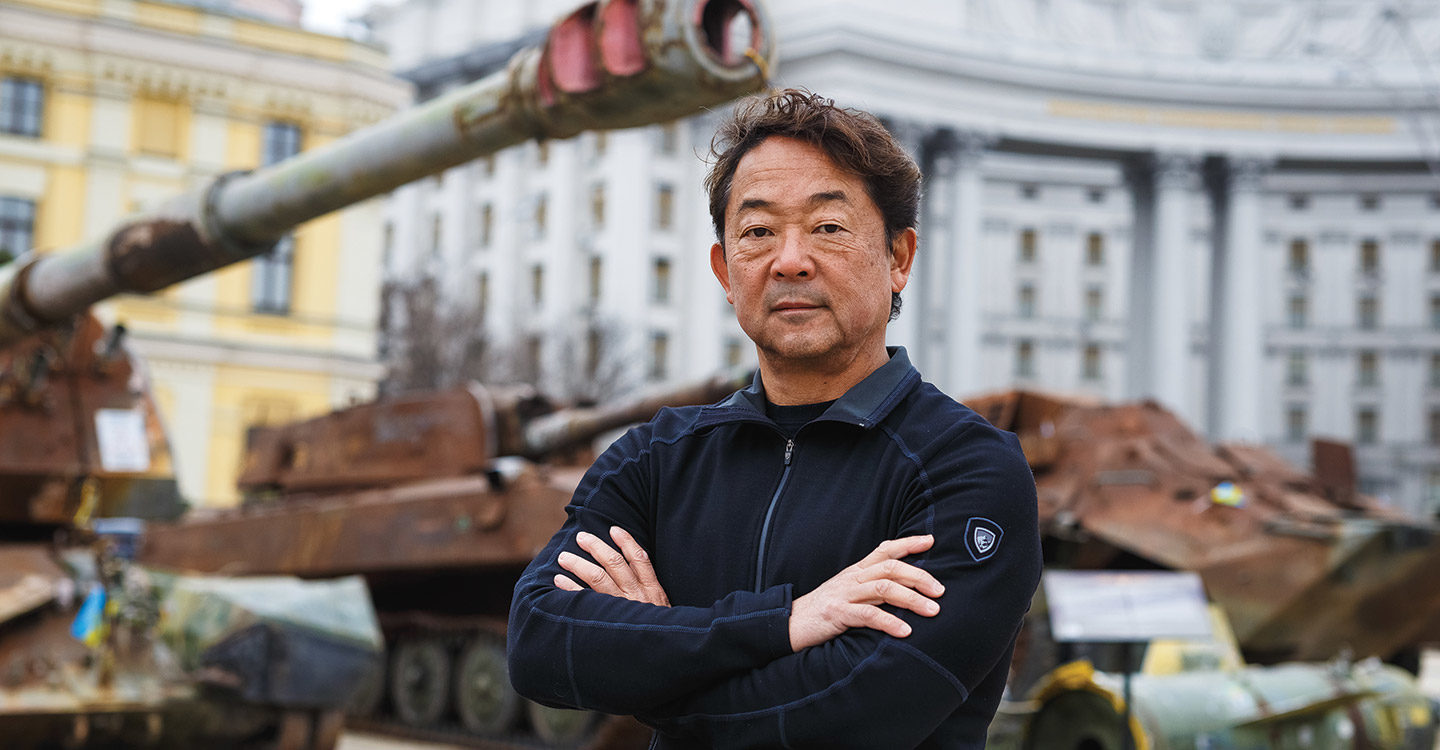
is moving ahead. Retired Navy Rear Adm. David Nash, former
head of Naval Facilities Engineering Command, is in Baghdad
setting up a team to manage the next infrastructure reconstruction
program (ENR 9/29 p. 12). Nash says he and a small staff are
designing an organization to administer the program. The team
will have U.S. civilians, military construction and administration
experts, as well as Iraqis.
"Weve offered to help
out Dave Nash," says Lt. Gen. Robert B. Flowers, the
Armys Chief of Engineers. "Weve offered our
services to be the executor for construction if he needs it
done, and to provide contract oversight."
Nash also is pulling in experts
like Deidre Lee, the Pentagons senior procurement officer.
"Initially shell work from Washington because thats
where all the activity will be for a while," Nash says.
He is reluctant to talk specifically about planning, explaining
that it is being "rehashed and refined" and he doesnt
want to send confusing messages. Plans may change if "detailed
guidance" emerges in the final spending package.
Project and enterprise management
technology will play a big role, Nash says. The World Bank
has estimated Iraq can absorb only $6 billion in reconstruction
work next year, yet the program Nash is preparing is planning
for about 2 1/2 times that amount, probably over a longer
term. Nash says that the work would be spread around the country
and the ambitious program could be achieved by using robust
management tools. "Technology has got to be one of our
sources of leverage," Nash says. "We have to be
sure we are as transparent as possible." He says he will
seek an "off-the-shelf," well-tested, Web-based
project/enterprise management system. A request for proposals
is being drafted.
"We are making progress and
there are a lot of great things happening," says Nash.
"My goal is to keep on doing that and get the job done."
 |
BUSY
State Company for Oil Projects workers pour generator
pad at Basra Refinery in August.
(Photo courtesy of USACE/Task Force Rio) |
On Oct. 9, U.S. Ambassador L. Paul
Bremer said power generation in Iraq hit 4,518 Mw on Oct.
6, exceeding the prewar average, which the United Nations
Iraq Program estimated between 4,300 and 4,400 Mw in November
2002.
Generation has edged upward since
early July, thanks to "a combination of repair and replacement
of parts and integral components of the facilities,"
says Cynthia Huger, Baghdad-based spokeswoman for Bechtel,
San Francisco.
Eighteen power facilities throughout
the country "were either in a forced outage or operating
at reduced levels averaging at 30% to 40% reliability,"
Huger says. Electricity ministry employees, Iraqi subcontractors,
international specialty contractors and Bechtel engineers
tackled a multitude of problems, she notes. Finding parts
for obsolete equipment is a continuing problem. "Many
of the facilities are decades old [and] most of the replacement
parts are from manufacturers who are no longer in business,"
Huger says.
The transmission grid remains in
poor condition, with about 1,100 towers, or 26% of the primary
132-kv and 400-kv grid out of service. "Transmission
lines are down in all parts of the national grid," says
Huger. "The next goal for the power sector is to achieve
6,000 Mw of reliable power before the summer peak next year."
Part of the increase will come from about 1,000 Mw of new
gas-turbine generators.
Field Reports From Iraq
ENR editors monitor a continuous
flood of information about the situation in Iraq and the progress
of reconstruction. The data provides an ever-changing view
of the conditions there. This field update was developed from
press statements, e-mail communications and live, or telephone
interviews our editors have gathered on the subject recently
from numerous sources.
Included are comments several military
contacts, including Lt. Gen. Robert B. Flowers, the Army's
Chief of Engineers, from an interview on Oct. 6; Col. Gregg
Martin, commander of the U.S. Army's 130th Engineer Brigade
and the chief combat engineer of the army's ground troops
in Iraq; Col. Martin's deputy, Lt. Col. David (Mark) Holt,
who is tasked with facilities development.
Comments from Cynthia Huger, Baghdad-based
spokeswoman for Bechtel, are also included.
Military engineers
Via e-mail, Lt. Col. Holt
reports the Army's forces engineers are very busy on three
large-scale tasks:
Standing
Up the New Iraqi Army"The facilities program
led by U.S. Army Engineers is really driving much of the new
army policy. Facilities decision are forcing the operational
decisions for building and employing the army. And they are
building some excellent facilities at extremely reasonable
costs, and partnering fully with Iraqi counterparts,"
Holt says.
 |
| MUNITIONS
Caches turn up everywhere in
Iraq. (Photo by Tom Sawyer for ENR) |
Captured
Enemy Ammunition Disposal Holt says the Coalition
has teamed with the U.S. Army Corps of Engineers to bring
in contractor explosive ordnance demolition and unexploded
ordnance experts to destroy or safely store over 600,000 tons
of Iraqi munitions and ordnance. Four contracts of one-year
duration totaling $286 million have been awarded, and contractors
are starting on the work. "They are efficiently replacing
army units to do other tasks," Holt says. Six operations
sites are to be established in next several months.
The contractors will eventually
take over blasting, storage, transportation and associated
life support missions. He predicts the program will last at
least couple years. "The magnitude of the problem is
truly staggering and the success thus far truly impressive,"
Holt says.
 |
|
Prime Power soldiers Staff Sgt. Brett
Knutson (left) and Staff Sgt. Mark Kromer, 249th Engineer
Battalion from Seitzingen, Germany, prepare wiring for
a branch circuit in to refrigerate Army and Air Force
Exchange Service storage containers. (Photo courtesy
of 130th Engineer Brigade)
|
U.S. Base
ConstructionThe third major mission the army's
engineers are engaged in is building facilities for the bed-down
of U.S. forces. "Again the numbers are staggering,"
Holt says. Most of work is being done through KBR. "Interesting
program in the several billion dollar range," Holt says.
"All
of these missions are an interesting mix of Engineer TroopsActive,
Guard and ReserveUSACE and contractors, depending on
the needs of the mission, relative capabilities and competencies,
and availability to do the job," adds Col. Martin.
"Engineer
troops continue to do it all, with every type of engineer
unit. We're also doing a lot of humanitarian civic action
for the Iraqis and playing a key role in training the Iraqi
Civil Defense Force," Martin says.
Power
The transmission grid remains
in bad condition with 800 of 3,100 kilometers of the primary
132-kv and 400-kv grid out of service, wrote Bechtel's Huger
recently in response to e-mailed questions. "Transmission
lines are down in all parts of the national grid: north, heartlands
and south,"
"In the north, 132-kv transmission
lines connecting the Kurdish Zone with the national grid are
down. In central Iraq, 400-kv transmission lines connecting
northern and western power-generation plants with Baghdad
are down, as well as portions of the 400-kv grid around Baghdad.
In the south, two key 400-kv transmission lines connecting
southern generating plants with Baghdad are down, as well
as primary 132-kv transmission lines to key users in the southern
area," Huger says.
Huger reports the Ministry of Electricity,
with assistance from Bechtel, Task Force Restore Iraqi Electricity
and the USACE are restoring 400 kv lines to connect northern
powerplants to the southern regions, with Baghdad being a
priority. The goal is to maintain 6,000 Mw, 18 hours per day,
before hot weather returns next summer.
 |
Turbine
deck at Bayji power plant
(Photo courtesy of Bechtel) |
Engineers are planning to use scheduled
maintenance windows in the fall and spring to repair and upgrade
equipment and increase production. Bechtel and the Ministry
of Electricity have written several hundred material requisitions
for services, materials, tools and equipment to support the
program.
Materials needed are replacement parts for steam turbine generators,
pumps, piping components, electrical components, instrumentation
and controls, boiler tubes, as well as structural items. Orders
are also being placed for gas turbine generators for new generation
facilities.
The process of restoring generation
has been a combination of repair and replacement of parts
and integral components at 10 gas turbine and 8 thermal facilities
scattered across the country. It has included repairing leaking
boiler tubes, adjusting fans, troubleshooting vibration problems,
and replacing worn turbine bearings and corroded solenoid
valves. Facilities were either in a forced outage, or were
operating at reduced capacity, averaging between 30% and 40%
reliability. Ministry of Electricity employees, local subcontractors,
international specialty subcontractors and Bechtel engineers
have performed the work.
Huger says the difficulty of finding
parts has slowed some of the repairs. "Many of the facilities
are decades old. Most of the replacement parts are from manufacturers
who are no longer in business." Problems include the
difficulties of finding parts for obsolete equipment, or properly
identifying parts when the clues must be deciphered, one-by-one,
from among sometimes many name plates on pieces of equipment
that are either completely, or partially destroyed.
USACE's Gen. Flowers, who has visited
Iraq four times since May, says his perspective has given
him what he calls "four snapshots in time."
"Every time I've been over
there, things are better," he says. For example, the
increased power production means, "You're talking about
Baghdad having power after 10 o'clock at night." In addition,
"there's a plan in place now for developing a maintenance
system for the infrastructure," Flowers says.
In transcripts of testimony before
House Appropriations Foreign Operations Subcommittee in Washington,
D.C. on Sept. 30, U.S. Agency for International Development
Administrator Andrew S. Natsios shed light on developments
in the sector and the strategy being used:
"We are increasing power
reliability and reducing security costs by disconnecting some
plants from the vulnerable power grid and installing smaller
generators at each facility. This will make sewer and water
treatment plants independent of the power grid and much easier
to protect from terrorist attacks," Natsios testified.
Water utilities
 |
Waste
treatment plants are getting generators to give them independence
from the grid.
(Photo courtesy of DOD) |
Natsios also provided insight into
the steps being taken to repair the water and sewer infrastructure.
"We have helped Iraqi municipal governments repair over
1,700 pipe breaks in Baghdad's water network, increasing water
flow by 200,000 cubic meters per day
" and, "we
have rehabilitated 70 of Baghdad's 90 non-functioning waste
pumping stations; and we began installing generators at 37
Baghdad water facilities and pumping stations," as well
as at an additional eight water treatment and pump stations
in the south.
In Mosul, 101st Airborne Division
reports that soldiers from it's 926th Engineer Group are working
with Bechtel and USAID on a what promises to be a multi year
project to rebuild the city's four-plant sewerage system.
Currently less than 2% of the Mosul's 1.8 million people are
on a functioning system. The CPA is spending more than $2.5
million replacing outdated and broken equipment.
Telecommunications
 |
Iraqi
telephone ministry employees splicing 1,800 pair cable
for termination in new containerized switches in Baghdad.
(Photo courtesy of Bechtel.)
|
Three companies were chosen
Oct. 6 to build the country's first national mobile telephone
system. Asia-Cell won the bid to start work in the north,
Orascom in the central region and Atheer in the south. Service
was expected to start appearing within weeks.
Under the terms of the award, each
company is required to concentrate in its region, but once
a pre-set level of service has been reached, the company is
free to expand beyond its territory and challenge the others.
The arrangement is expected to give all the companies a strong
incentive for a fast build-out.
USAID's Natsios in his testimony
Sept. 30 also reported that Bechtel has awarded sub-contracts
for 12 containerized telephone switches and one satellite
gateway for international telephone calls. "The projects
will restore international calling for Iraq and reconnect
all 240,000 phone lines in Baghdad presently without service,
returning the city to pre-conflict level of 540,000 operational
phone lines." Natsios said. He said the work would be
accomplished "between late October and mid-January, approximately
one every week."
He also said work was continuing
to "complete repairs to the nation's fiber optic network
from north of Mosul, through Baghdad and Nasiriyah to Umm
Qasr by November," and mentioned "repair of the
2,000-km fiber optic cable that will connect 20 cities to
Baghdad."
Business development
Recent indicators about the
general business climate, and how it may affect American firms
intending to work in Iraq include Coalition Provisional Authority
Order 39, issued Sept. 19, establishingin coordination
with the Iraqi Governing Councilthe terms and procedures
for making foreign investments. The stated intention is to
attract investment by establishing safeguards for the rights
and property of investors and by establishing a system of
registration and regulation. A few days later, the Iraqi minister
of finance, Kamel Al-Gailani issued a statement that the economic
and financial reform work with the CPA was continuing on rules
governing a central bank, international bank entry, taxes
and tariffsincluding a flat 5% reconstruction surcharge
on all imports except humanitarian goods.
USACE's Gen. Flowers says the Corps
has taken the lead in promoting contacts between U.S. and
Iraqi engineers. For example, the American Society of Civil
Engineers is working with Iraqi civil engineers to develop
standards, he says. "They have some excellent engineers
there and they're just starved for professional standards
and contacts. That's been a very successful thing, and I'm
optimistic," Flowers says.
New currency began to circulate
Oct. 15. Iraqis have until Jan 15 to exchange old currency
for new on a one-to-one basis. More denominations and greater
security against counterfeiting are expected to help stabilize
the economy. The elimination of Saddam's mug on the money
and the appearance of crisp new bills is also expected to
have a positive psychological effect.
 |
 |
 |
 |
| NEW
MONEY The new notes replace images of Saddam (top)
with images from Iraq's heritage such as great structures,
scientists and their achievements, as well as the newly
reconstructed grain elevator at the near Basra, capable
of offloading 60,000 tonnes per hour. |
Tenders are also circulating
for all kinds of materials and work. There are many sources
of information, but from within Iraq the Coalition Provisional
Authority has a Website at www.cpa-iraq.org. with a button
at the bottom of the page for business solicitations. Regional
reports linked from the page also include business opportunities.
In the north region, an on-line Kirkuk Business Center has
been created with U.S. Army assistance. Its regular, English-language
newsletter is available for download.
The Oct. 1 issue of the Kirkuk
newsletter included a feature on the owner of an asbestos
pipe plant looking for financial backers to help him convert
it to manufacture glass reinforced plastic pipe for utility
construction. Significant funds for utility projects are available,
but the price of imported materials is driving up costs. Kirkuk
city engineers are hoping to develop a local GRP pipe supply.
The newsletter also includes
a report on private venture re-development of the city's train
station, a story about private company bus company resuming
regular passenger service to the Turkish border, with connections
to Istanbul, and a classified section listing other business
opportunities.
Security
Security, and its effect
on reconstruction, remains the 300-pound gorilla in Iraq.
But it is difficult to get a comprehensive and fair feel for
how it affects activities there. News reports are always incident
driven, so by their very nature, the incidents being reported
are almost always very bad.
An alternate window into the situation,
however, is offered by Centurion Risk Assessment Services.
The company is a U.K.-based training and risk assessment firm
run by former British soldiers that specializes in providing
services to journalists and aid workers operating in hostile
environments. Its trainers currently on assignment in Iraq
have been filing comprehensive incident reports on the company's
Website every 10 days or so that give broad view on changing
conditions around the country, trends, and sometimes advice.
The reports can be found under the "aid safety net"
tab at www.centurionsafety.net.
Security of the electrical transmission
facilities is one of the main challenges facing reconstruction,
says Bechtel's Huger. Without divulging sensitive details,
Huger would only say, "The current levels of transmission
will be sustained. Security is improving on protection of
the transmission lines through the efforts of the CPA."
Security is a CPA responsibility, she added.
In the final analysis, Flowers
points out that infrastructure reconstruction is much more
than a matter of engineering. "I believe there's a correlation
between the infrastructure and security," he says. "The
better the infrastructure gets and the better the perception
of the Iraqi individuals' quality of life is, the less they
will tolerate foreign fighters coming in and attacking Americans,
which only disturbs their life." He says the population
is starting to turn this corner. "More and more people
are coming to the new Iraqi police or coalition forces and
saying, There's a foreigner who's moved in and they
have some weapons. Here's where they're at.' "
|