Second
work plan relies on new TBMS, aggressive grouting
5/30/2005
...work in earth pressure balance
mode for short periods and can accommodate water pressures
up to 10 bar. The TBMs are the same design for both tunnels
but the machine working the east tunnel is fitted with more
extensive dewatering equipment. Both tunnels require three
types of grout, controlled by computer, as are segment placing
and TBM operation.
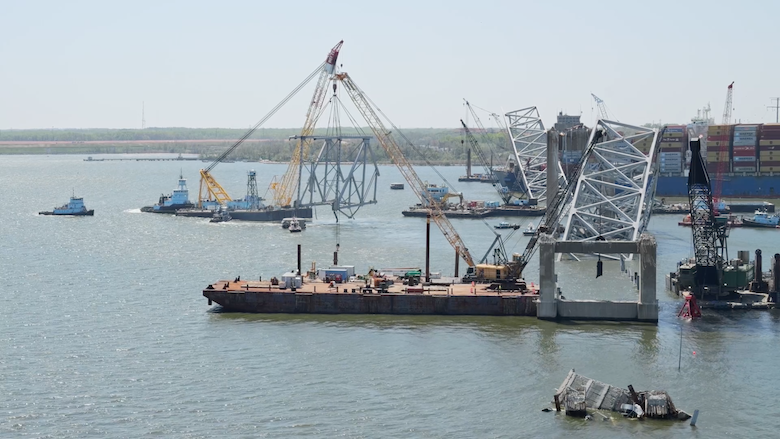
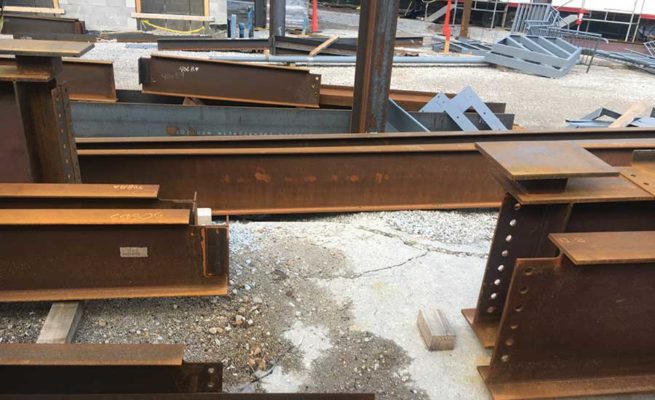
Cut
and Place. TBM is designed for cutting hard rock
but is fitted with shield to handle water inflow. Segments
are lifted by vacuum. (Photo left courtesy of the Metropolitan
Water District of Southern California; photo right by
John J. Kosowatz for ENR)
This time, project officials wanted
a better idea of what lays ahead of the machines so the cutterheads
are fitted with ports allowing probes to reach 100 to 150
ft ahead of the bore. Probe drilling is mandatory and two
are always in use. If inflows exceed .3 gallons per minute
per probe, mining halts while grout is injected through other
ports, ahead of the machine. When flows recede, mining begins
again, says John Townsend, project manager with construction
manager Hatch Mott McDonald. Spoil is removed with a train
of muck cars.
Behind the cutterhead, crews are
erecting a precast concrete segmental liner that, combined
with aggressive grouting of the annular space, is designed
to withstand 900 ft of hydrostatic head and handle a magnitude
8 earthquake. Tests of the system were conducted prior to
construction at the University of Illinois. The tunnels will
be fitted with concrete-reinforced steel pipe to a finished
diameter of 12 ft.
"We tried to take the original
design and move it forward," says David Crouthamel, tunnel
engineer for Jacobs & Associates, San Francisco. Jacobs
and Bechtel Engineering won the task to redesign after MWD
shut the job down in 2000. Crouthamel says the team drew on
concepts from the English Channel Tunnel project and others
faced with high water pressures. "This is pushing the
envelope as far as hydrostatic head," he says.
Crouthamel believes San Diegos
outfall carries the highest functional design, at about 400
ft of head. For comparison, the Channel Tunnel was designed
to withstand a range of 350 to 360 ft of head, he says.
Key to the design are the 13.5-in.-thick,
trapezoidal precast segments, fitted together and secured
to tunnel walls with bolted gaskets. They are produced in
a casting yard in nearby Palmdale by a joint venture of Shea,
Traylor Bros. and Ghazi Contractors. At 6,000 and 8,000 psi
of compressive strength, they are above average for industry
standards. "Thats a pretty thick segment for such
a small diameter bore," says Crouthamel. "Its
a fairly robust design."
Segments are delivered to the rear
of the TBM, where a vacuum lift moves them onto a feeder under
a conveyor. When five segments and a key that comprise a ring
are loaded, another vacuum erector picks and places them for
bolting.
Segments are cast with exterior
vertical grooves and openings for grout bags that are filled
after placement. As grout is injected, the bags expand against
the wall, creating a seal that prevents groundwater from moving
along the sides to any exposed openings.
"It is really pretty forgiving,"
says Crouthamel. "The segments are so thick and with
the [small] diameter of the tunnel, its not highly flexible."
Natural Disasters
Besides difficult conditions underground, the project also
has taken hits from the surface. Local wildfires swept through
the dry, hilly area in 2003, coming close to the tunnel portal
at Waterman Canyon, above San Bernardino. Shea/Kenney had
removed brush around the site, creating an effective fire
barrier that prevented damage.
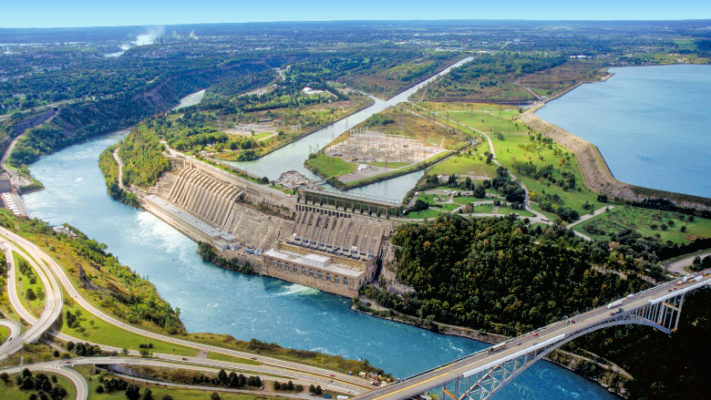
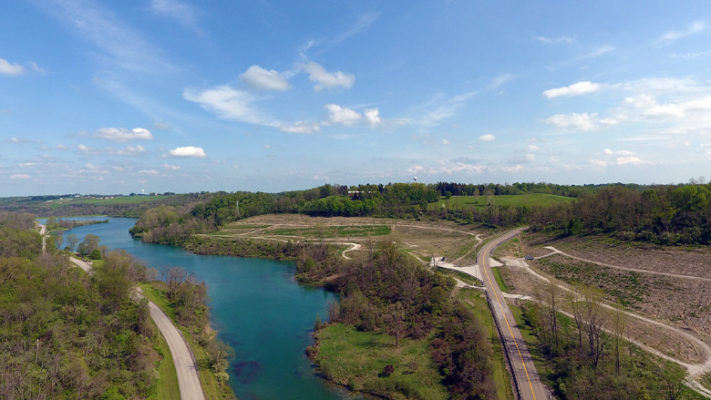
Buried.
Waterman Canyon portal was inundated in a mudslide, stopping
work for months.(Photo left by John J. Kosowatz for ENR,
photo right courtesy of the Metropolitan Water District
of Southern California)
But the project took a direct hit
on Christmas Day of 2003, when massive mudslides swept down
canyon walls and inundated the west portal in Waterman Canyon.
The mud buried the TBM and shut down the job for three months.
Although the slides were deadly, there were no worker injuries
because the job was closed for the holiday. Overall, the owner
reports only a few minor injuries on the project.
That event and slow progress in
the west tunnel have pushed the schedule back from March 2007
to the end of 2007 or early 2008, says Tempelis. Grouting
can take longer than anticipated if major water problems develop,
a situation that can give the contractor "day to day
extensions," says Tempelis.
The contract specifies liquidated
damages of $2,500 per day but it is still too early in the
project to anticipate. "We are delayed but its
hard to predict" a finish date, he says. "This next
year is going to be critical."
Gives readers a glimpse of who is planning and constructing some of the largest projects throughout the U.S. Much information for pulse is derived from McGraw-Hill Construction Dodge.
For more information on a project in Pulse that has a DR#, or for general information on Dodge products and services, please visit our Website at www.dodge.construction.com.
Information is provided on construction projects in following stages in each issue of ENR: Planning, Contracts/Bids/Proposals and Bid/Proposal Dates.