With a population
of 22,000 people, Geneva, Ill., is a typical Midwestern suburb.
But inside city hall, officials are clamoring for more powerthe
electrical kindand they have succeeded. Geneva is building
a 29-Mw, natural-gas-fired plant that planners hope will bring
energy independence to residents and businesses.
Users hit hard by todays
erratic cost of transmitted energy are showing noticeable
interest in meeting peak power needs with distributed generation
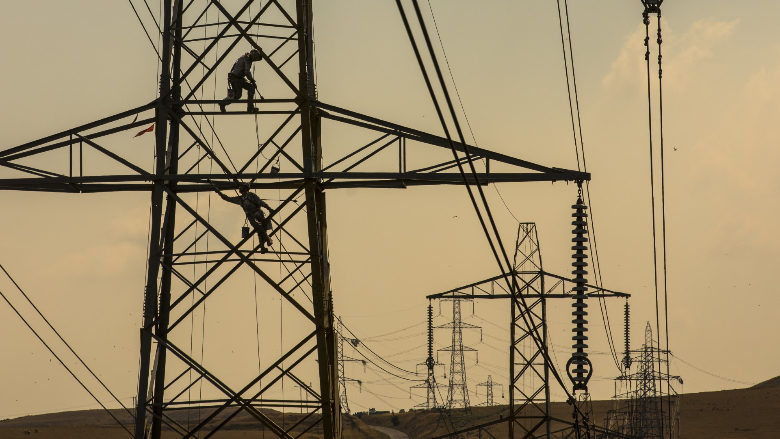
(ENR 4/9/01 p. 44). But economics is not the only reason.
Despite the high up-front investment, these pocket powerplants
sited near the demand may gain even more popularity as users
evaluate the need for reliable, local power during mass outages,
such as the grid meltdown the Northeast experienced on Aug.
14.
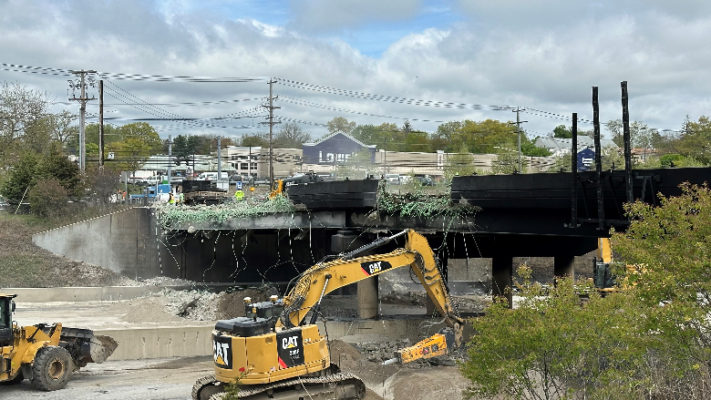
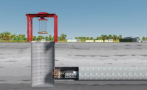
Geneva's
29-Mw plant cost $17 million.
(Photo top courtesy of Caterpillar Inc.)
The U.S. derives 10% of its current
electrical capacity from distributed generation, totaling
about 60 Gw, according to John Kelly, director of Gas Technology
Institutes Distributed Energy Technology Center, Des
Plaines, Ill. Kelly estimates the market has a 100 Gw potential
by 2012, the bulk of which is likely to be be in and near
urban areas.
Geneva fits the bill, located about
40 miles directly west of Chicago. "I think DG has more
people looking into it," says Joseph Summers, vice president
of HWS Energy Partners and president of Industrial Technology
Group. Geneva hired the Champaign, Ill.-based firms for construction
management and electrical engineering services, respectively,
for its $17-million facility, which Summers says is 75% completed.
The 10,000-sq-ft powerplant will house five 5.9-Mw generators
powered by natural-gas-fired reciprocating engines. Costing
$11 million, the 8,000-hp Caterpillar engines are 40 ft long,
15 ft tall and 10 ft wide. The city estimates the plant will
help save $177 million in peak energy costs over 40 years.
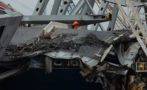
Cleveland
Water treatment plant are investigating new backup. (Photo
courtesy of NorthEast Ohio Regional Sewer District)
"Historically, we have owned
our own power utility, but to date, we have not generated
power," says Phil Page, Genevas city administrator.
"In the uncertainty in the deregulated market, we think
our rates will definitely be going up [and] we felt it was
important to try to control some of our destiny."
Geneva officials initially decided
to build the plant to offset energy costs, but it will help
out during power outages as well. If Chicago ever experienced
a blackout like Aug. 14, the new powerplant will be able to
supply electricity to Geneva residents, but "we wouldnt
have the capacity to keep our businesses running," says
Page. "The bottom line is to get the lights back on as
fast as possible," says James Greever, Genevas
electrical superintendent. "Economics is a major driving
factor. Beyond that, it is local control and reliability."
Geneva is not alone. Water treatment
officials reeling from the unexpected blackout in Cleveland
say they now are planning to hire consulting engineers to
study additional power options. The backup diesel generators
in their facilities were designed only to handle critical
loads, not full operations.
"We do not have major backup
or alternative energy when the grid goes down," says
Tim Tigue, director of operations and maintenance for the
Northeast Ohio Regional Sewer District. "In the next
couple of months, we are definitely going to look at alternative
supply."
A self-described proactive utility
operator, Greever expects major construction of Genevas
gas-fired plant to wrap in January. It should be ready to
supply peaking power by next summer, he says.
Gives readers a glimpse of who is planning and constructing some of the largest projects throughout the U.S. Much information for pulse is derived from McGraw-Hill Construction Dodge.
For more information on a project in Pulse that has a DR#, or for general information on Dodge products and services, please visit our Website at www.dodge.construction.com.
Information is provided on construction projects in following stages in each issue of ENR: Planning, Contracts/Bids/Proposals and Bid/Proposal Dates.