 |
| (Photo
courtesy of US Gypsum) |
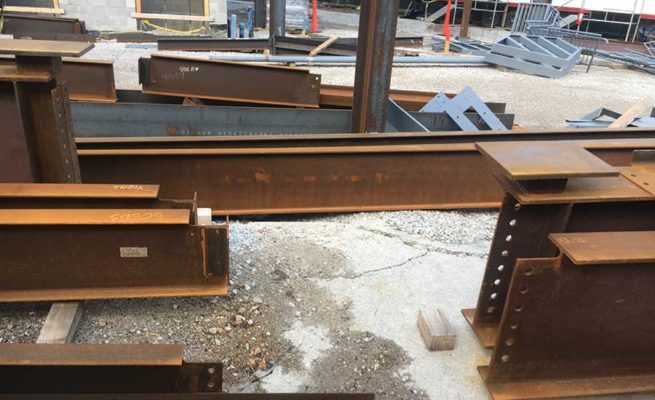
The year began with
an explosion in steel prices that reverberated throughout
construction. That was followed by aftershocks in lumber,
plywood, gypsum wallboard, copper, stainless steel, insulation
and concrete products. The rebound in nonresidential construction
markets, strong spending on public works and record levels
of home building pushed up demand for materials and prices
along with it. The resulting higher materials prices propelled
inflation in the construction industry from 3% at the beginning
of the year to about 10% by September, according to ENRs
building cost index.
These tight market conditions were
tested even further in the southeastern states at the end
of the third quarter as a series of hurricanes shut down job
sites and sent consumers scrambling for plywood (click
here to see story - Deadly Hurricane Trio Whips Up New Debate).
However, the storms impact on materials prices will
be very local and relatively short-lived, say industry sources.
The more immediate cost associated
with the recent hurricanes has been with project delays, says
Jose Moreno Jr., president of BCM Construction Management,
Miami. "Every time there is a hurricane warning, we have
to shut down and secure our work sites, stopping work from
four to five days," he says. Building costs in the Miami
area are up about 10% from a year ago, Moreno adds.
In the "strike zone,"
suppliers are scrambling to replenish their storehouses of
building materials. "For the first time in our history,
we have actually called on our stores across the country,"
says Don Harrison, eastern division spokesman for The Home
Depot, Atlanta. "This resupply mission is off the charts,"
he says.
Despite the demand, long-term vendor
contracts are keeping supplier prices at bay. "We have
a no-price-gouging policy," says Harrison. "Once
a storm track is identified, prices on all commodities are
locked in," he says.
"We expect market conditions
[in the Southeast] to be back to normal within a few weeks,"
says Rusty Carroll, oriented- strand board marketing manager
for Louisiana-Pacific, Nashville, Tenn. Supplies are being
rerouted and the storms will have no significant long-term
impact on price and availability of building products, he
says.
"Years ago, hurricanes had
a bigger impact on lumber and plywood prices," says Jon
Anderson, publisher of Random Lengths, a Eugene, Ore.-based
publication that tracks lumber and panel prices. Today, markets
adjust quickly to these disruptions, he says.
Nationally, the seasonal slowdown
after Labor Day had a bigger impact than the storms, says
Anderson. Plywood prices fell 4% in the week after Hurricane
Ivan hit...
|