The housing contagion is starting to infect healthy nonresidential-building and public-works markets. The sub-prime mortgage virus has devastated the credit markets, causing sickness in the stock market and forcing the federal government to put virtually the entire financial system on life support. Given the economic backdrop, it is hard to find a pulse
in this year’s batch of construction industry forecasts for 2009.
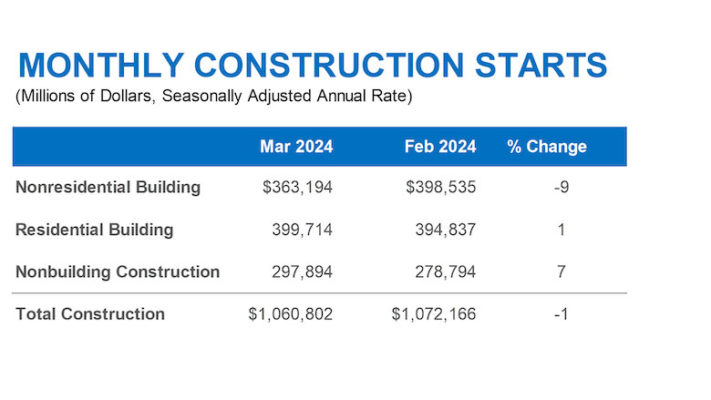
McGraw-Hill Construction (of which ENR is part) is forecasting a 7.4% decline in construction starts in 2009, following declines of 12.4% this year and 8.0% in 2007. The U.S. Dept. of Commerce forecasts a 7.5% decline in total new construction put-in-place in 2009, following this year’s 6.3% decline. The Portland Cement Association looks for construction put-in-place to fall 13.9% next year, after adjusting for inflation. FMI Corp. anticipates a 7.4% decline in total construction work next year. The National Association of Home Builders calls for housing starts to post their fourth consecutive year of double-digit declines, with another 16.2% drop in 2009.
The scary thing about these forecasts is that, to some degree, they all assume the best conditions. They assume that the $700-billion federal financial bailout will thaw out the credit freeze, that there will be further fiscal stimulus and that all of the other economic “shoes” won’t drop. To a person, every economist interviewed by ENR admits the risk of inaccuracy in their forecast due to optimism.
“The steep declines we have seen in construction starts [which are a leading indicator to construction put-in-place] will translate into declines in construction spending next year that will at least match the 7% decline called for by the U.S. Dept. of Commerce and others,” says Robert Murray, chief economist for McGraw-Hill Construction.
Those declines could continue into 2010; Murray predicts construction starts will tumble another 7% next year. Three years of retreat will pull the dollar volume of total construction starts back to $514.6 billion, its lowest level since 2002, according to MHC.
FORECAST 2009
McGraw-Hill Construction Starts
$ millions (current dollars)
TYPE OF CONSTRUCTION
ACTUAL 2007
ESTIMATE 2008
FORECAST 2009
PERCENT CHANGE
07-08
08-09
TOTAL CONSTRUCTION
634,395
555,475
514,575
–12.4
–7.4
RESIDENTIAL
264,134
172,800
168,075
–34.6
–2.7
Single-Family Housing
201,194
128,775
126,650
–36.0
–1.6
Multifamily Housing
62,940
44,025
41,425
–30.1
–5.9
NONRESIDENTIAL
233,864
243,875
220,200
+4.3
–9.7
Office Buildings
32,151
31,850
27,675
–0.9
–13.1
Hotels and Motels
13,988
15,200
12,900
+8.7
–15.1
Stores and Shopping Centers
29,513
23,050
20,700
–21.9
–10.2
Other Commercial
24,101
19,700
17,700
–18.3
–10.2
Manufacturing
17,491
29,625
20,275
+69.4
–31.6
Educational Buildings
52,712
56,900
55,025
+8.0
–3.3
Health Care Facilities
24,028
26,675
25,975
+11.0
–2.6
Other Institutional Buildings
39,880
40,875
39,950
+2.5
–2.3
NONBUILDING CONSTRUCTION
136,397
138,800
126,300
+1.4
–9.0
Highways and Bridges
53,437
51,900
50,000
–2.9
–3.7
Environmental Public Works
37,026
36,900
35,200
–2.8
–4.6
Other Public Works
30,482
26,,000
24,300
–14.7
–6.5
Electric Utilities
15,452
24,000
16,800
+55.3
–30.0
SOURCE: MCGRAW-HILL CONSTRUCTION.
The most interesting part of the third year of declining volume is the new sectors hit. While the recession already has squeezed out most of the slack in the housing market, it is just starting to bite into the nonresidential sector. Murray predicts the dollar value of new residential construction starts will fall another 3% next year, but nonresidential building work will tumble 10% in 2009 after a 4% gain in 2008. Perhaps more significantly, Murray believes nonbuilding construction also will fall 9% next year, which would mean that every major construction market would fall into the negative column in 2009.
“If I were modifying the forecast now, I would be inclined to say there is a downside risk to the commercial building markets,” says Murray. “But if Congress passes a fiscal stimulus package, the declines projected for public works may not be so severe.”
Murray admits this year’s forecast was difficult to fashion because economic events are moving so fast. “There has been a huge amount of money directed to thawing out the credit markets, and there is a growing sentiment to go ahead with a massive stimulus package,” Murray says. “But as of mid-November, we still don’t have a sense of how effective these steps will be.”
The two biggest market swings forecasted by Murray are in industrial and power work. He predicts manufacturing work will go from a 69% boom in 2008 to a 32% bust in 2009. Likewise, work for electrical utilities will go from a positive 55% in 2008 to a negative 30% next year.
Housing, nonresidential and nonbuilding work are slumping, pulling total construction starts in the region 12% below 2008.
A 12% drop in construction starts will be the fourth consecutive annual decline in the economically hard-hit region.
SOURCE: McGraw-Hill Construction, Annual Starts
But those swings are not so much a sign of weaker markets as they are a retrenchment from an extremely strong 2008. “This year’s manufacturing numbers were pumped up by four massive additions to oil refineries totaling...
• December 28 Issue
• December 7 Ad Close
Stay top of mind in print and online to the owners, engineers and contractors you need to reach.
Get connected today by contacting your account manager, call: 800-458-3842 or