Search
ENR Content Purchase Questions View Cart My ENR Content My ENR Account

 news
 Buildings
 Cost Indexes
 Education
 Environment
 Finance & Business
 Power & Industrial
 Information Technology
 International
 Construction Technology
 Construction Week
 Transportation
 Safety & Health
 Washington Observer
 Workplace
POWERPLANTS
New Cooling-Water Intake Is Low-Cost and Fish-Friendly
A new federal regulation for cooling-water-intake systems has powerplant operators shopping for solutions. A New York engineering firm has developed a system that it claims complies with the new regulation at a fraction of the cost of a new cooling tower and with none of the shortcomings of competing systems.

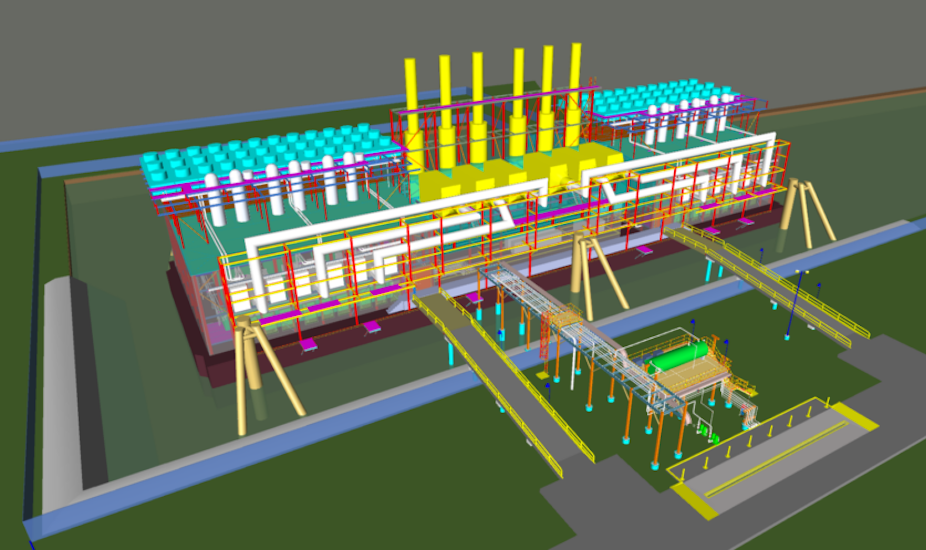
Energy and Environmental Analysts Inc., Garden City, N.Y., has just completed a feasibility study for its Substratum Intake System for Keyspan Corp., Brooklyn, N.Y. Keyspan now is reviewing the test results to determine whether to install the system at its 1,500-MW Northport Station. A Keyspan scientist who has been involved in the study says, "It does look promising." Click here to view diagram

In contrast with conventional surface-water intake structures, SIS draws in surface water filtered through a natural sand bed via underwater well fields.

Almost alone among cooling-water systems, SIS addresses two requirements of the Clean Water Act, Sections 316 (a) and (b), says Jim McAleer, director of strategic projects for EEA. Section 316 (a) relates to thermal pollution from cooling-water discharge and (b) to protection of aquatic life-forms from impingement on intake screens and from entrainment in the case of micro-organisms.

- advertisement -

Roy R. Stoecker, EEA vice president, says he conceived the idea after visiting the Coney Island Aquarium in Brooklyn. He was told that its water came from a deep-water well a half-mile offshore, where it was sterile and a constant temperature year-round.

Stoecker took the idea to Keyspan, where it quickly aroused interest. Keyspan now is a minor partner in developing the concept. Interest in environment-friendly intake-water systems has been growing since a lawsuit by an environmental activist organization against the Environmental Protection Agency resulted in court decisions requiring EPA to enforce relevant sections of the Clean Water Act (ENR 6/28/04 p. 19).

"I’m encouraged to see that there are some folks out there thinking outside the box," says James E. Templeton, principal of Aradia Management LLC, Southbury, Conn. Templeton consults on generation for powerplant operators. But he cautions, "These [EEA Inc.] are water guys, they’re not power guys. I’m not sure they really understand what goes on in that black box that is the powerplant."

Christopher Gross, Keyspan senior scientist, says SIS has two major points in its favor: First, taking sand-filtered water from below Long Island Sound avoids impinging macro-organisms on intake screens and entraining micro-organisms in the intake water. Second, the water is cooler year-round. This benefit has yet to be field-tested, but if true, it would mean improved efficiency of the condensers and of the overall plant, he says. Northport’s winter water temperature is 32°F but summer temperatures are about 75°F. The temperature of cooling water from SIS should be 55°F, Gross says.

EEA has received oral notice of award of a contract from the Puerto Rico Electric Power Authority, San Juan, for a feasibility study on its system. An EPA environmental scientist says SIS should be well suited for tropical powerplants because their intake water normally is warmer than what SIS would yield. Stoecker says he has been told the increased efficiency could yield savings in the millions of dollars.

Subscribe: Try 4 Issues of ENR for FREE!

- advertisement -


America Rising

© 2005 The McGraw-Hill Companies, Inc.
All Rights Reserved